The Ultimate Guide for Professionals, Researchers, and Entrepreneurs
Introduction
A Genetics Lab is the leading edge of the contemporary science responsible of advancement in the field of medicine, research, industry and education. The genetics lab will be a big investment irrespective of whether you are a professional, a researcher or a business owner and this will need to be strategized, comply with regulations as well as have an in-depth knowledge of technology and market demands. This detailed manual covers all the details of establishing a genetic laboratory, infrastructure, equipment, workflow, personnel requirements, hazards and risk control, and business plan. All along, keywords that are search engine optimized, including: genetics lab setup, genetics lab equipment, genetic testing business plan and lab accreditation, are incorporated to provide maximum search results.
What is a Genetics Lab?
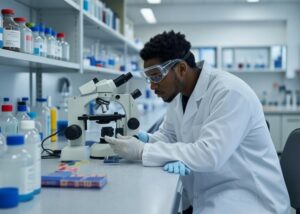
Genetics laboratory is a special laboratory where genetic material, DNA, RNA, chromosomes and genes are examined, manipulated and interpreted. Such laboratories are critical in hospitals, medical diagnostic centers, research centers, pharmaceutical industries, industrial biotechnology and educational centers. Genetics lab facilities can also specialize in various fields, such as clinical diagnostics, genetic engineering, genomics, molecular biology, and so forth.
Key Functions of a Genetics Laboratory
- Genetic Testing & Diagnostics: Identifying genetic disorders, carrier status, and disease risk.
- Research: Investigating gene function, expression, and regulation.
- Genetic Engineering: Modifying organisms for medical, agricultural, or industrial purposes.
- Pharmaceutical Development: Supporting drug discovery and personalized medicine.
- Education: Preparation of the students and professionals in new genetic methods.
- Industrial Quality Control: Ensuring product safety and compliance in biotechnology and food industries.
Planning Your Genetics Lab
1. Define Your Lab’s Purpose
- Medical Diagnostics: Specialize in testing of patients, risk of disease, and clinical services.
- Research: Focus on experimentation, superior equipment and innovation.
- Industrial/Quality Control: Prioritize high-throughput screening and regulatory compliance.
- Educational: Support hands-on training and curriculum requirements.
2. Market Analysis and Business Plan
- Target Market: Clients in the hospitals, clinics, research organizations, industry partners, educational institutions.
- Competitive Analysis: Assess local and regional competitors, their services, and pricing.
- Regulatory Landscape: Understand licensing, accreditation, and compliance requirements (e.g., NABL, CAP, CLIA).
- Financial Projections: Approach the costs of start-ups, operating expenses and sources of revenues.
- Market Trends: Examine the new trends that are related to next-generation sequencing, personalized medicine, and direct-to-consumer genetic testing.
3. Facility and Infrastructure
- Location: Select a location where there is easy access by both clients and sample.
- Space Planning: Designate space to receive, process, do the analysis, store, and dispose of waste.
- Utilities: Ensure reliable water supply, drainage, electricity (with backup), and ventilation.
- Sanitation: Use materials for walls, ceilings, and floors that are easy to clean and resistant to biohazards.
- Security: Only authorized personnel should be allowed to access it.
Essential Equipment and Instruments
A well-equipped genetics lab should have the following core instruments:
| Equipment | Purpose/Function |
|---|---|
| PCR Machine (Thermal Cycler) | Amplifies DNA/RNA for analysis |
| Centrifuge | Separates components based on density |
| Gel Electrophoresis System | Separates DNA, RNA, or proteins |
| Spectrophotometer | Quantifies nucleic acids and proteins |
| Microplate Reader | Measures absorbance, fluorescence, or luminescence |
| Biosafety Cabinet | Protects samples and personnel from contamination |
| Laminar Air Flow Hood | Provides aseptic workspace |
| Incubator | Maintains optimal temperature for cultures/reactions |
| Deep Freezer (-80°C) | Stores reagents and biological samples |
| Refrigerated Centrifuge | Processes temperature-sensitive samples |
| Analytical Balance | Precise weighing of samples and reagents |
| Micro Pipettes | Accurate liquid handling |
| Water Bath | Maintains constant temperature for reactions |
| Vortex Mixer | Mixes solutions quickly and efficiently |
| Computer & Printer | Data management and reporting |
| DNA Sequencer (Sanger/NGS) | Determines nucleotide sequences |
| Flow Cytometer | Analyzes cell populations and markers |
| Microscopes (Light/Fluorescence) | Visualizes cells and chromosomes |
| Autoclave | Sterilizes equipment and media |
| Glassware & Consumables | Beakers, flasks, pipettes, slides, Petri dishes |
This list should be tailored to your lab’s specific focus (clinical, research, industrial, or educational).
Laboratory Design and Workflow
Layout Considerations
- Reception and Accessioning Area: For patient registration and sample drop-off.
- Sample Collection Room: Dedicated space for drawing blood and collecting other specimens.
- Pre-Analytical Section: Nucleic acid extraction, centrifugation, and sample preparation.
- PCR Setup Room: DNA/RNA amplification in a contamination-free environment.
- Post-PCR Room: Analysis of amplified products (e.g., gel electrophoresis, sequencing).
- Data Analysis and Reporting Area: Secure space for bioinformatics and result interpretation.
- Storage: For samples, reagents, and hazardous materials.
- Waste Management: Dedicated area for safe disposal of biohazardous and chemical waste.
Workflow Optimization
- Unidirectional Flow: Ensure samples move in one direction to minimize cross-contamination.
- Zoning: Separate clean and contaminated areas.
- Automation: Implement Laboratory Information Management Systems (LIMS) for tracking and reporting.
- Space Requirements: Plan for future expansion and evolving technologies.
Staffing and Training
Key Personnel
- Lab Director/Manager: Oversees operations, compliance, and quality assurance.
- Geneticists/Molecular Biologists: Design and interpret tests, troubleshoot instruments.
- Medical Laboratory Technologists: Perform routine and specialized analyses.
- Bioinformaticians: Analyze sequencing data and interpret genetic results.
- Technical Assistants: Support sample processing and equipment maintenance.
- Administrative Staff: Handle billing, logistics, and customer service.
Training and Competency
- Initial Training: On SOPs, equipment use, and safety protocols.
- Ongoing Education: Updates on new technologies, quality standards, and regulatory changes.
- Competency Assessment: Regular evaluation to ensure proficiency and compliance.
Safety and Quality Assurance
Safety Measures
- Personal Protective Equipment (PPE): Lab coats, gloves, eye protection, and masks.
- Biosafety Cabinets: For handling infectious or hazardous materials.
- Chemical Safety: Proper storage, labeling, and handling of reagents.
- Fire Safety: Extinguishers, alarms, and emergency exits.
- Waste Disposal: Segregation and safe disposal of biological and chemical waste.
- Universal Precautions: Treat all specimens as potentially infectious.
- Disinfection: Clean work areas before and after use with appropriate disinfectants.
- Emergency Procedures: Know the locations of eyewash stations, showers, and first aid kits.
Quality Control
- Internal QC: Regular calibration of instruments, use of control samples.
- External QC: Participation in proficiency testing programs.
- Documentation: Maintain detailed records of procedures, results, and incidents.
- Accreditation: Seek certification from recognized bodies (e.g., NABL, CAP, ISO 15189).
Common Genetics Lab Tests and Applications
| Test/Application | Description | Relevance |
|---|---|---|
| PCR-based Tests | Detect specific genes, mutations, or pathogens | Diagnostics, research, forensics |
| DNA Sequencing (Sanger/NGS) | Determine nucleotide sequences | Genomics, personalized medicine, research |
| Karyotyping | Analyze chromosome structure | Genetic disorders, prenatal diagnosis |
| FISH (Fluorescence In Situ Hybridization) | Visualize gene/chromosome abnormalities | Cancer, genetic syndromes |
| Genotyping/SNP Analysis | Detect genetic variations | Disease risk, pharmacogenomics |
| Gene Expression Profiling | Measure mRNA levels | Cancer, developmental biology |
| Array CGH | Detect copy number variations | Genetic disorders, oncology |
| Carrier Screening | Identify carriers of recessive genetic diseases | Family planning, population screening |
| Pharmacogenomics | Assess drug response based on genetics | Personalized medicine |
These tests form the backbone of clinical, research, and industrial genetics labs
Regulatory Compliance and Accreditation
- Licensing: Obtain necessary licenses from local and national authorities (e.g., State Government License, NABL, CLIA).
- Accreditation: Demonstrates adherence to international quality standards (ISO 15189, CAP).
- Quality Management System: Implement SOPs, equipment logs, and personnel records.
- Audit Readiness: Regular internal and external audits to ensure compliance.
- Data Security: Ensure patient and research data are securely stored and privacy is maintained.
Budgeting and Financial Planning
Startup Costs
- Infrastructure: Renovation, utilities, and security.
- Equipment: Purchase, installation, and calibration.
- Consumables: Reagents, glassware, PPE, and disposables.
- Staffing: Salaries, training, and benefits.
- Licensing and Accreditation: Application fees and inspection costs.
Operational Expenses
- Reagent and Consumable Replenishment
- Equipment Maintenance and Service Contracts
- Utilities (Electricity, Water, Internet)
- Waste Disposal Services
- Insurance (Liability, Fire, Theft)
Revenue Streams
- Diagnostic Testing Services
- Research Contracts and Grants
- Training and Educational Programs
- Consulting and Quality Assurance Services
Develop a detailed business plan with financial projections to attract investors and manage growth.
Marketing and Growth Strategies
- Digital Marketing: SEO-optimized website, social media, and online advertising.
- Partnerships: Collaborate with hospitals, clinics, and research organizations.
- Quality Differentiation: Emphasize accreditation, turnaround time, and advanced technology.
- Customer Service: Reliable reporting, transparent billing, and responsive support.
- Continuous Improvement: Invest in staff training, equipment upgrades, and new test offerings.
Trends and Innovations in Genetics
- Next-Generation Sequencing (NGS): High-throughput DNA/RNA sequencing for comprehensive analysis.
- CRISPR and Genome Editing: Precision gene modification for therapy and research.
- Digital PCR: Enhanced sensitivity and quantification.
- Bioinformatics and AI: Advanced data analysis, pattern recognition, and predictive diagnostics.
- Point-of-Care Genetic Testing: Rapid, decentralized testing for clinical and field use.
- Sustainable Practices: Green chemistry, energy-efficient equipment, and waste reduction.
Checklist for Setting Up a Genetics Lab
- Define lab purpose and scope
- Conduct market and competitor analysis
- Prepare a detailed business plan
- Secure funding and location
- Design lab layout and workflow
- Procure essential equipment and consumables
- Recruit and train qualified staff
- Implement safety and quality protocols
- Obtain necessary licenses and accreditations
- Launch marketing and outreach initiatives
Conclusion
Establishing a genetics laboratory is a complex but rewarding endeavor that blends science, business, and regulatory compliance. By following best practices in planning, infrastructure, equipment selection, staffing, safety, and quality assurance, you can build a lab that meets the needs of healthcare, research, industry, or education. Stay updated with technological advancements and regulatory changes to ensure your lab remains competitive and compliant.